“There are no pockets in shrouds.”
It was one of my dad’s favourite sayings.
Like many sayings, it carried a deeper meaning. Dad wasn’t really talking about shrouds. He was reminding us that when we die, we take none of our possessions with us. Not the house. Not the car. Not the money in the bank.
What remains are the relationships we’ve built, the stories we’ve shared, and the impact we’ve had on the people around us.
Four years ago, when Dad died, he was wrapped in a shroud before being placed in his coffin. Knowing he was shrouded felt significant and right.
At the time, I didn’t think much about shrouds beyond their significance to Dad.
Since becoming a funeral director, funeral celebrant and deathcare worker, I’ve spent years encouraging people to think differently about death and funerals, helping families understand their options and make choices that reflect the person who died.
It turns out I still had assumptions of my own to challenge.
Recently, I supported a family who chose a shrouded cremation. It was my first experience of witnessing and being part of one.
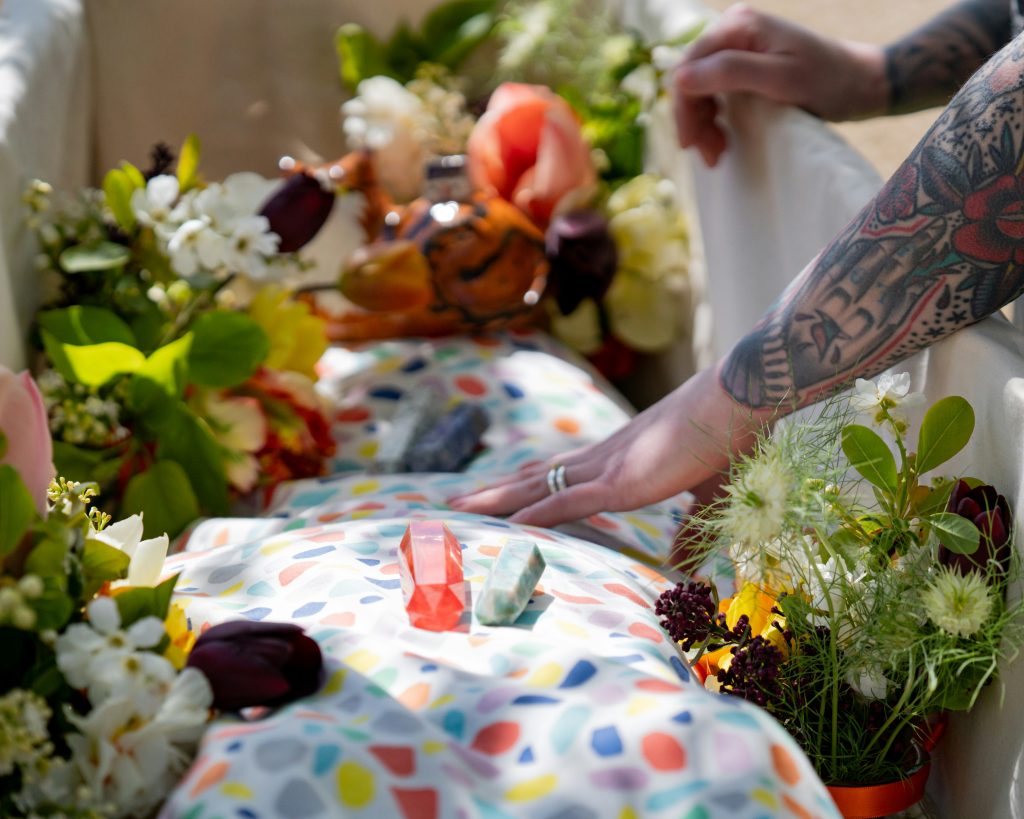
Without the familiar structure of a coffin, the shape of the body is unmistakable. We are just not used to seeing death this way. A coffin creates a boundary between us and the reality of a dead body. A shroud doesn’t.
What I was looking at was simply a human body being cared for. Wrapped gently. Held securely. Treated with dignity and respect.
It wasn’t strange at all.
In fact, what struck me most was how ordinary it felt.
Not ordinary in the sense of unimportant. Ordinary in the sense that this is how human beings have cared for their dead for much of history. Long before polished timber coffins, satin linings and brass handles, people were wrapped in cloth and cared for by their communities.
What we often think of as an alternative is, in many parts of the world, entirely ordinary. Shrouding has been part of deathcare practices for thousands of years and remains an important tradition in many cultures and faiths today. While the materials, rituals and beliefs may differ, there is something deeply human about wrapping and caring for a body after death. At its heart, a shroud is a simple act of care, one that connects us to generations of people who have tended to their dead long before modern funeral practices emerged.
Today, many Australians are surprised to learn that cremation doesn’t always require a coffin.
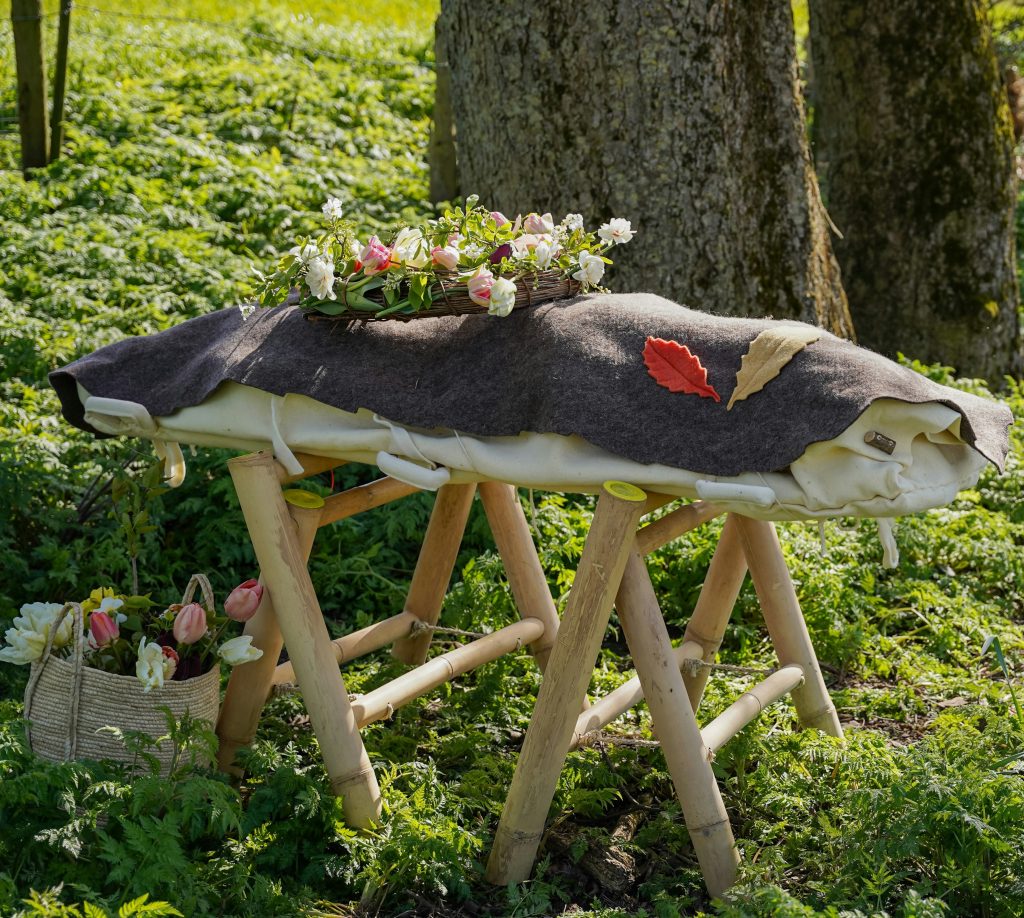
In a shrouded cremation, the person who has died is wrapped in a shroud or sheet. They are then placed on a purpose-built carrier that allows crematorium staff to transport and handle them safely and respectfully throughout the cremation process.
While shrouded cremation has been available in some parts of Australia for many years, it is only recently becoming more widely available as larger crematorium operators begin offering it as an option.
Whenever I talk about shrouded cremation, people often assume the decision is driven by cost or environmental concerns. For some families, that may be part of the reason. What I’ve noticed, though, is that the choice is often much more personal.
Some people are drawn to the simplicity. Some appreciate the reduced use of materials. Some feel that a shroud aligns more closely with their beliefs or values. Others simply feel it is a more natural way to be cared for after death.
The important thing is not whether someone chooses a coffin or a shroud. The important thing is knowing there is a choice.
For many years, the funeral industry has operated within a fairly narrow set of expectations. Most people have attended only a handful of funerals in their lives, so it’s understandable that they assume there is a standard way things must be done.
Yet there are many ways to care for a person after they die.
A traditional coffin may feel exactly right for one family. A shroud may feel right for another. Neither choice is better than the other. What matters is that families are given the information they need to make decisions that feel meaningful and authentic for their person.
For more information about shrouded cremation, have a read of the blogs by Lisa at The Bottom Drawer Book, or have a watch of this short video by my dear friend and fellow deathie, Amy Firth.
Photos by DEAD GOOD LEGACIES on Unsplash